


I bought a cheap purple Meshtastic device off Etsy for about fifty-five dollars. I wasn’t a prepper, I’m not a ham, and I didn’t have a use case. I had heard the word “Meshtastic,” understood roughly that it was LoRa mesh messaging, and the buy-in was low enough that curiosity outweighed skepticism.
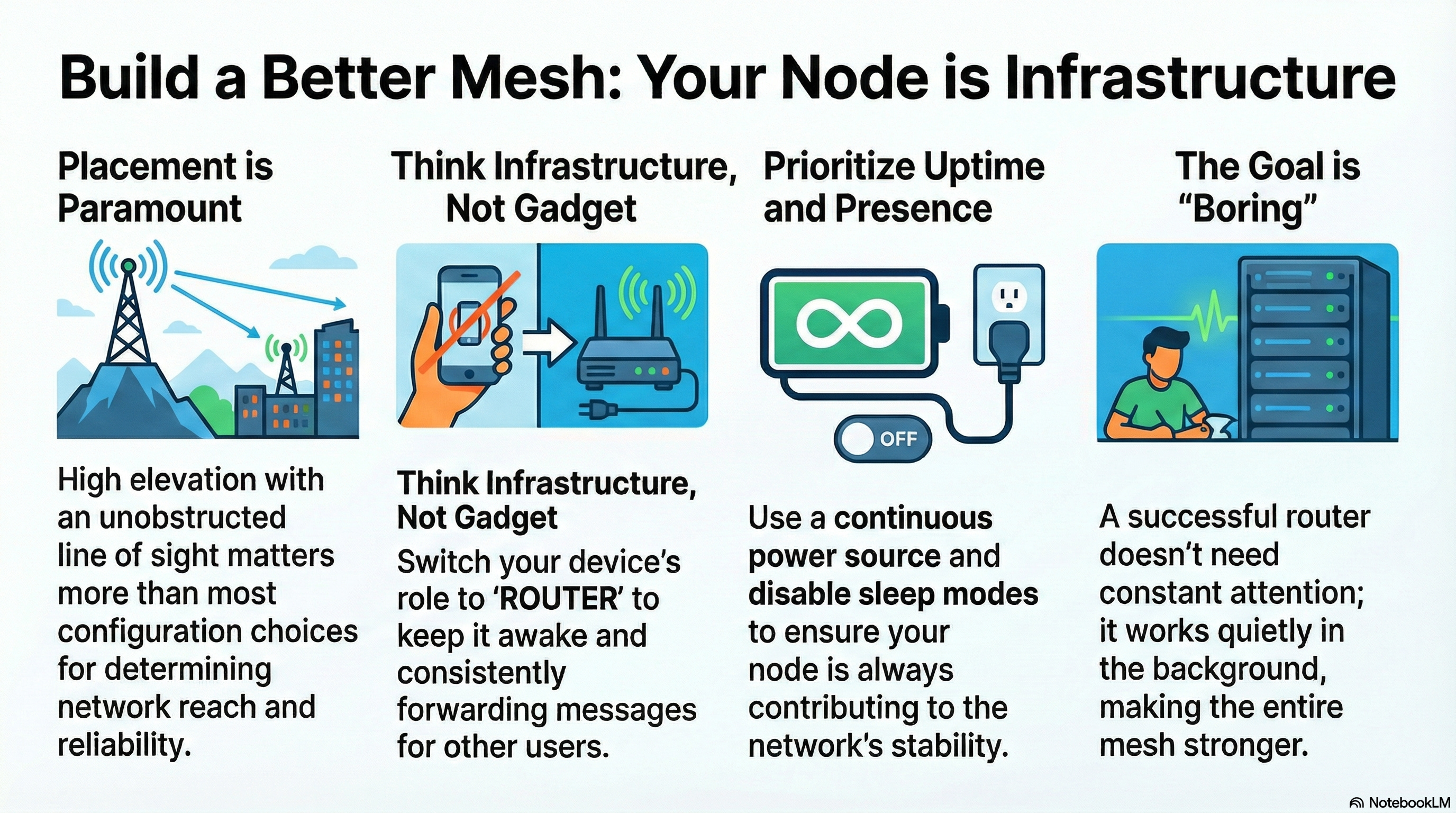
I live on the 8th floor in Arlington Heights, with windows facing southeast. From that height, there’s an unobstructed line of sight over a golf course and across a lot of low-rise terrain, all the way toward the Gaylord MGM. That’s not a theory or a simulation; it’s just geography. If you’re going to test low-power RF, elevation and clean Fresnel zones matter more than intent.
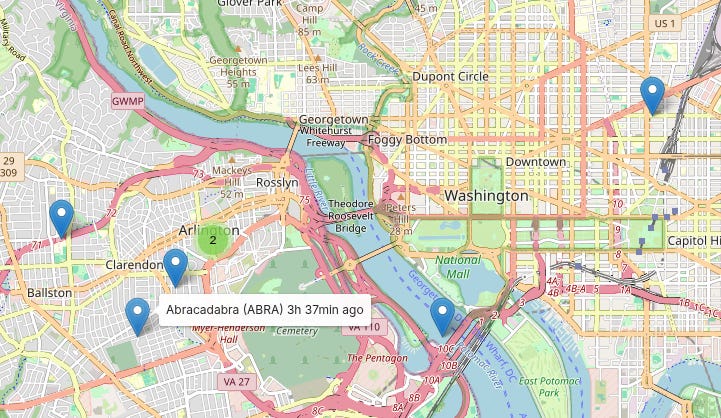
So I plugged the thing in and turned it on.
One of the first things I did was pick a handle. I went with ABRA at first, short for Abraham. That felt too personal for something that was supposed to function as infrastructure. I kept the short name but reinterpreted it as Abracadabra instead. It’s abstract, slightly playful, and not tied to a person. I like it, so I kept it.

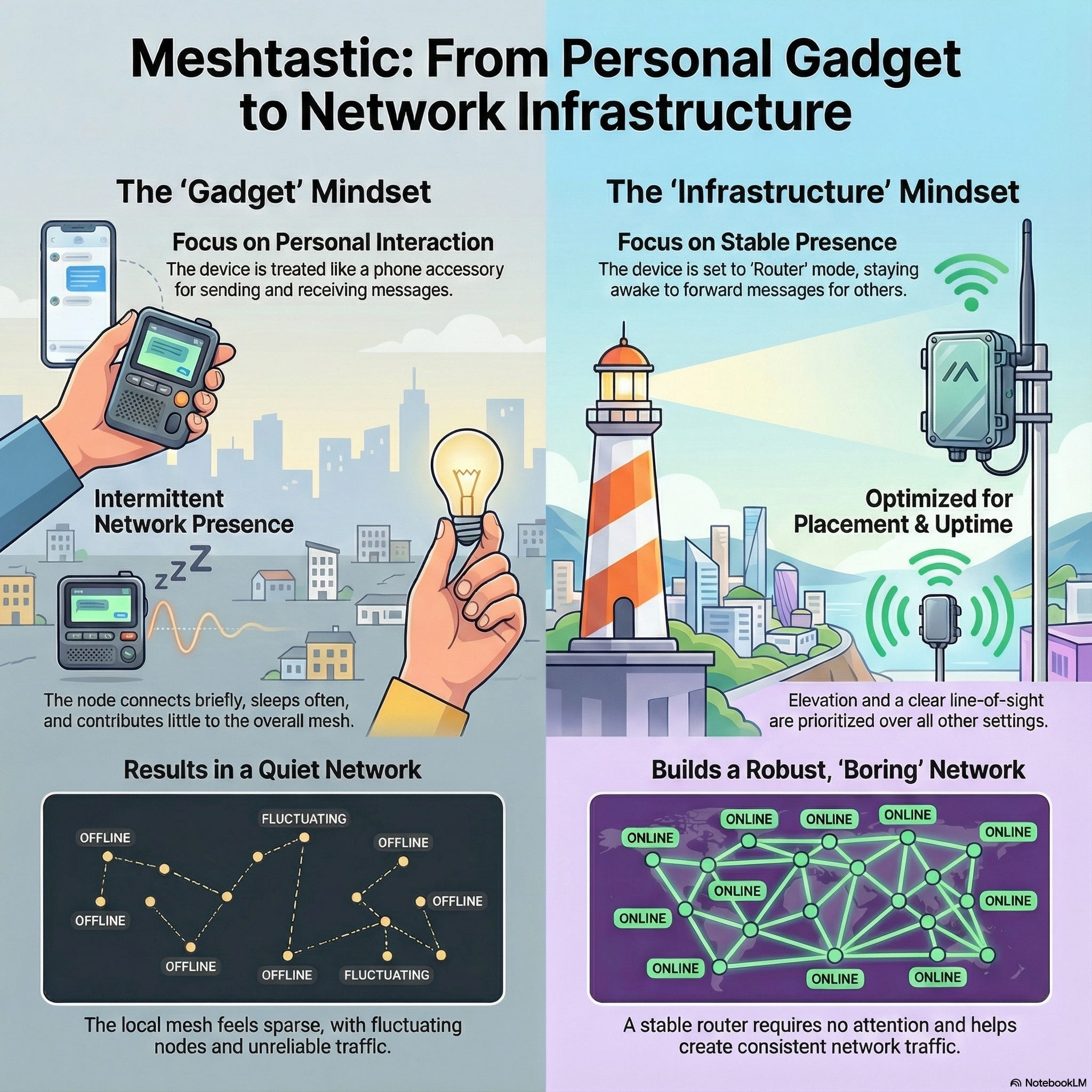
At first, the device behaved like a gadget. I paired it with my phone, sent a couple of test messages, saw some nodes appear and disappear. It worked, which was reassuring, but it didn’t immediately feel consequential. Traffic was sparse. Node counts fluctuated. Most activity looked like people checking in, not sustained routing.
I left it on.
That turned out to be the first meaningful decision, even though it didn’t feel like one at the time.
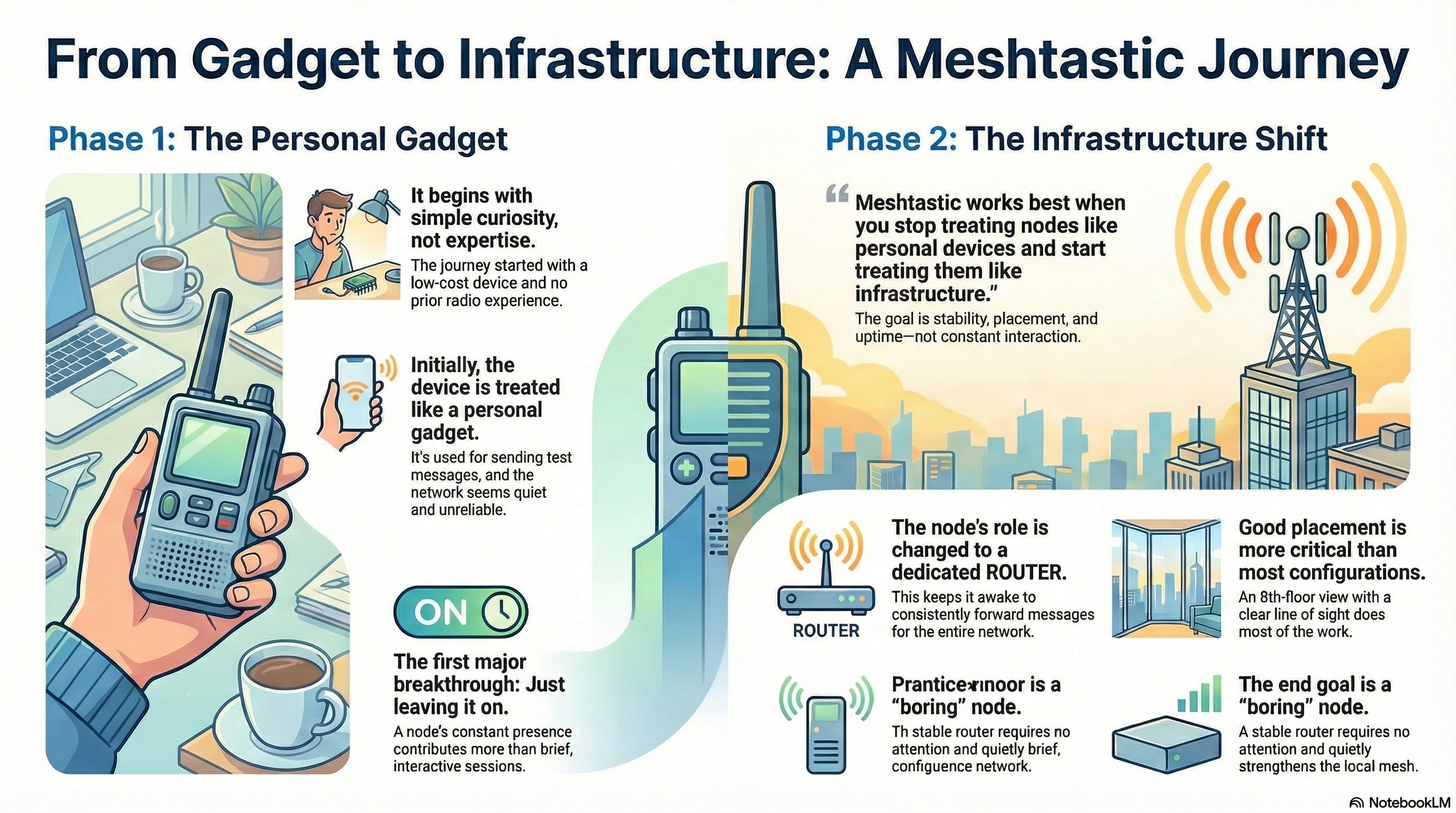
As I learned more, it became clear that Meshtastic doesn’t reward interaction as much as it rewards presence. Nodes that are on briefly don’t contribute much beyond their own momentary visibility. Nodes that stay up start to matter in ways that aren’t obvious from the app UI.
For a while, I was just a node. That made sense initially. I wasn’t moving around much, but I also wasn’t thinking in terms of infrastructure. I treated the device like something I checked, not something that existed independently of me.
That changed once it became obvious that the device was never leaving the window.
It’s now a permanent resident: purple enclosure, whip antenna, USB-C cable, always powered, sitting in an open apartment window. I don’t do Meshtastic wardriving. I’m not moving through space collecting nodes. There’s no reason for it to behave like a personal endpoint anymore.
So I switched it to ROUTER.
Not because I was trying to “help the network,” but because the device is stationary, wall-powered, and in a good RF position. In that situation, letting it sleep makes no sense. A sleeping node with good placement is just wasted potential.
That’s where the friction started.
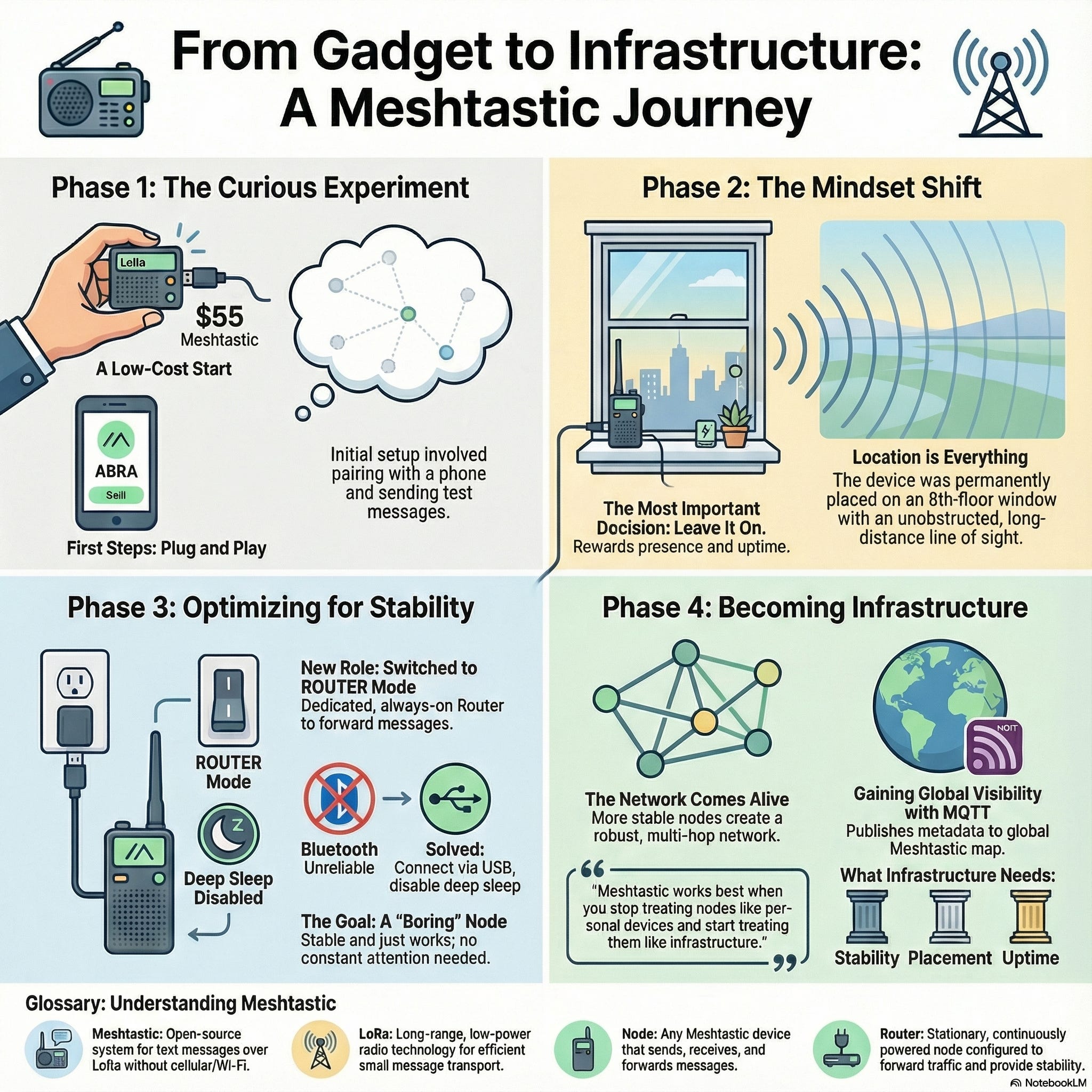
Router mode changes behavior in ways the app doesn’t really explain. Power management changes. Bluetooth becomes opportunistic instead of persistent. The device does exactly what it’s supposed to do, but that clashes with phone-centric expectations. From the phone’s perspective, the device feels unreliable. From the network’s perspective, it’s doing its job.
There was a period where Bluetooth access was inconsistent enough that it looked broken. It wasn’t. The control plane was sleeping while the radio stayed active. Once I accessed it over USB and looked at the actual settings, the behavior made sense.
I disabled deep sleep. Increased the Bluetooth wait time. Left the display on full time, because it’s plugged in and power isn’t scarce. That stabilized BLE access without compromising routing. The device stopped oscillating between “connected” and “asleep” states from the phone’s point of view.
Once that was sorted, the node became boring.
And boring is the goal.
When I first turned it on weeks ago, I was honestly disappointed. There were nodes, but they were quiet. A lot of names, very little traffic. It felt like a network in name more than in behavior. You could tell people were experimenting, checking in, then disappearing.
That’s changed.
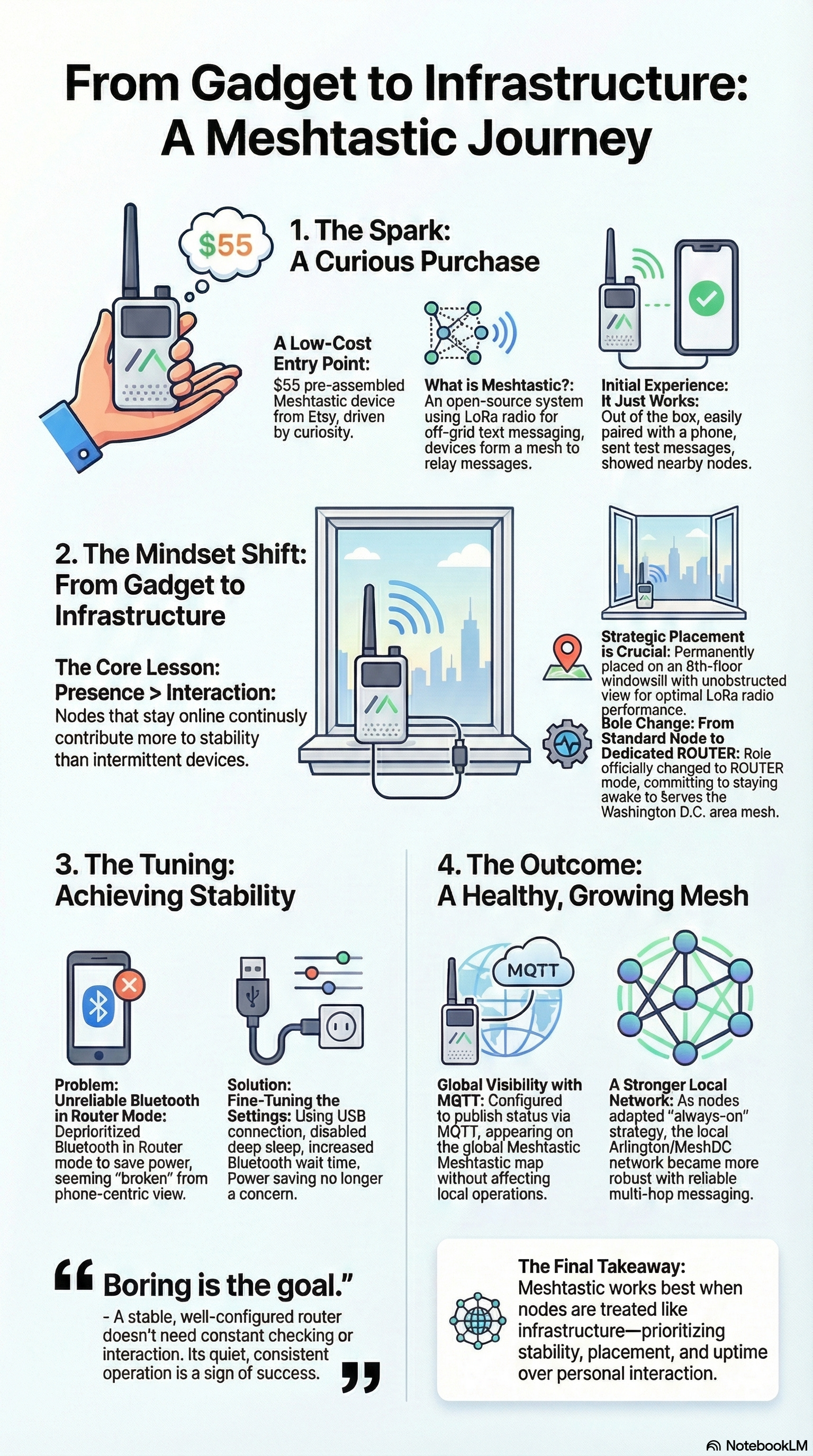
Around the same time I finished stabilizing my setup, the local Arlington / MeshDC area started showing more consistent LongFast traffic. Not because of anything I changed directly, but because more nodes stayed online. You could see it in hop counts, ACK frequency, and the persistence of nodes in the list. Messages weren’t just appearing; they were traversing.
This wasn’t dramatic. No single moment. Just a gradual shift from “occasionally detectable” to “continuously present.”
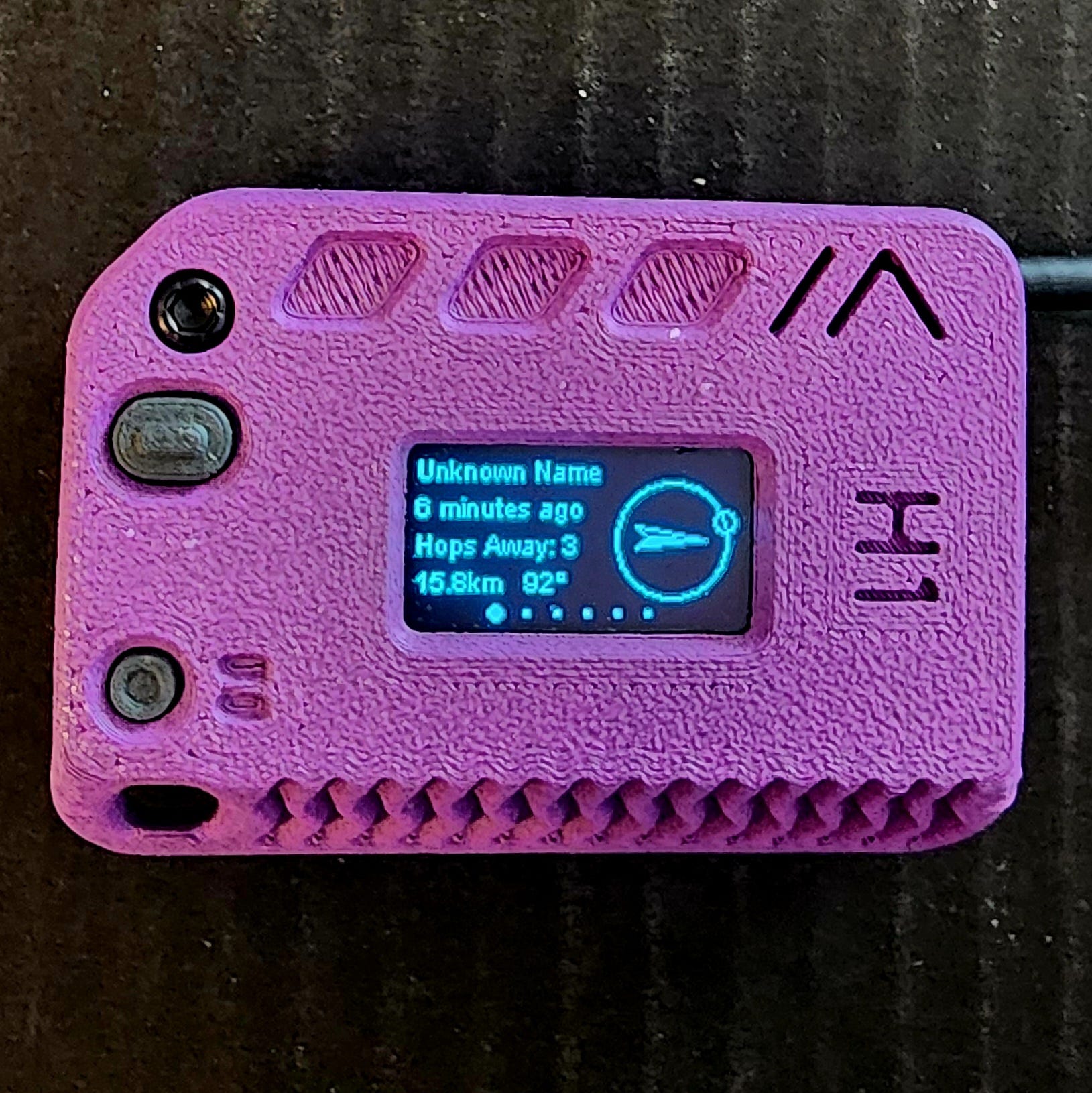
At that point, checking the app became less interesting. The system was doing what it was designed to do without needing attention. The node sat in the window, routed traffic, glowed quietly, showed up on the global map, and didn’t ask for interaction.
Almost all of the meta work happens off-network. MeshDC Discord, mostly. That’s where coordination, troubleshooting, and regional awareness live. That’s not a criticism. It’s just how things work now. The RF layer does its job quietly; the human layer centralizes somewhere else.
What I learned from the process wasn’t radio theory or emergency communications. It was simpler.
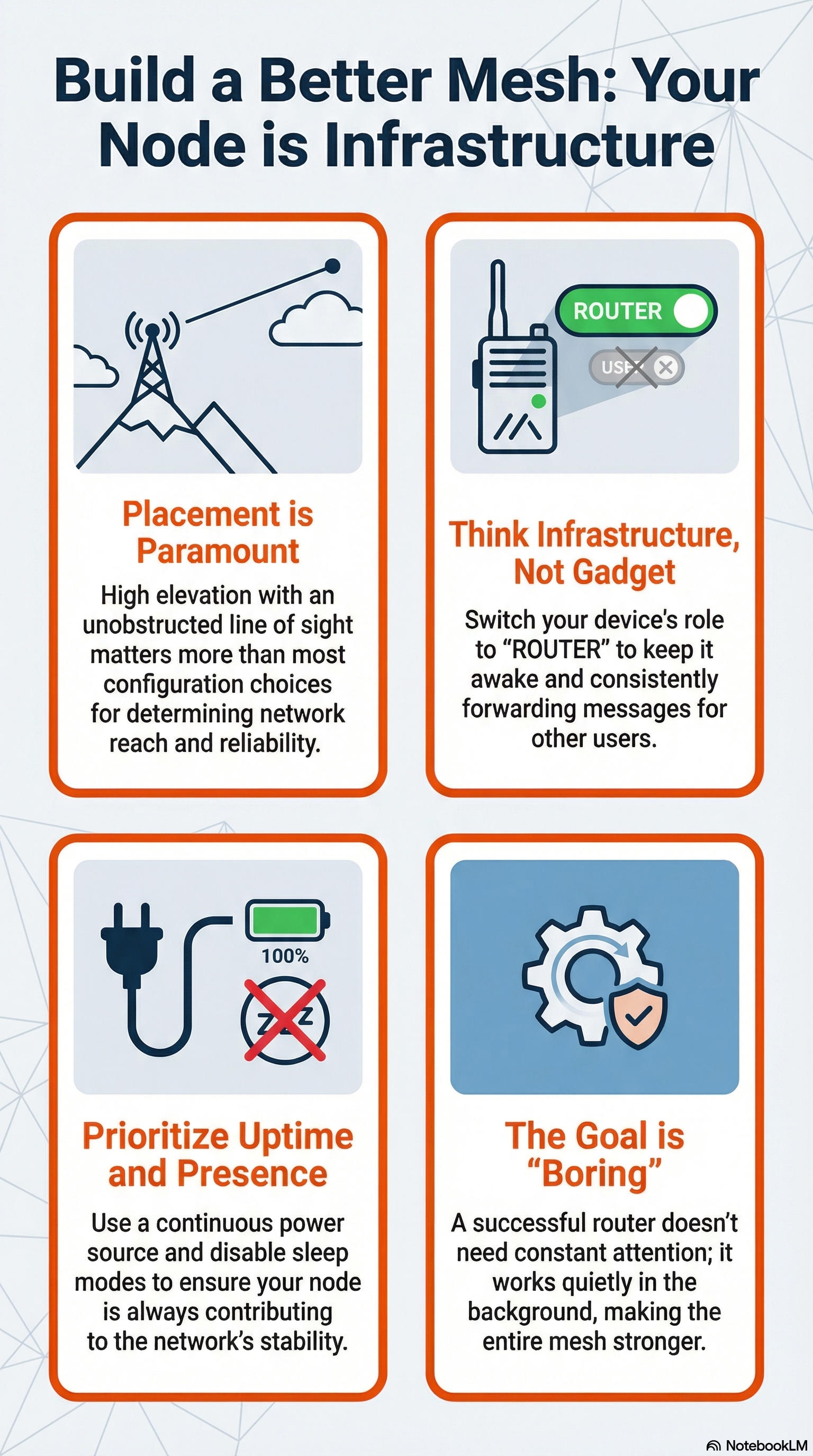
Meshtastic works best when you stop treating nodes like personal devices and start treating them like infrastructure. Infrastructure doesn’t need constant checking. It needs stability, placement, and uptime.
I didn’t set out to build infrastructure. I just left a cheap purple device plugged in on the 8th floor with a good view.
Everything else followed from that.
tl;dr
This text recounts Chris Abraham’s personal transition from a casual hobbyist to a provider of community radio infrastructure using Meshtastic technology. By placing a low-power LoRa device in an elevated apartment window, he established a consistent connection point for a decentralized messaging network in the Arlington area. The narrative explains how he optimized his hardware by switching it to router mode, prioritizing constant uptime and signal relaying over personal portability. He emphasizes that the network’s strength relies on permanent nodes that function independently of human interaction to facilitate reliable data hopping. Ultimately, the source serves as both a technical guide and a philosophical reflection on how individual presence can strengthen resilient communication systems.


